Why the tidal Thames
A powerboat course on the tidal Thames isn’t a lap of a lake. Tide, current and working traffic are part of every lesson, and your Level 2 counts as a coastal course.
The RYA grades training water by how demanding it is. The Thames at Trinity Buoy Wharf is Category C, with a tidal range of up to 7.5m, so a Level 2 here counts as a coastal course. Courses on lakes, reservoirs and enclosed docks are inland ones.
If you only plan to potter on a lake, that may not matter. If you want to take a boat out on the coast, here or abroad, it does: you’ll have learned on water that moves.
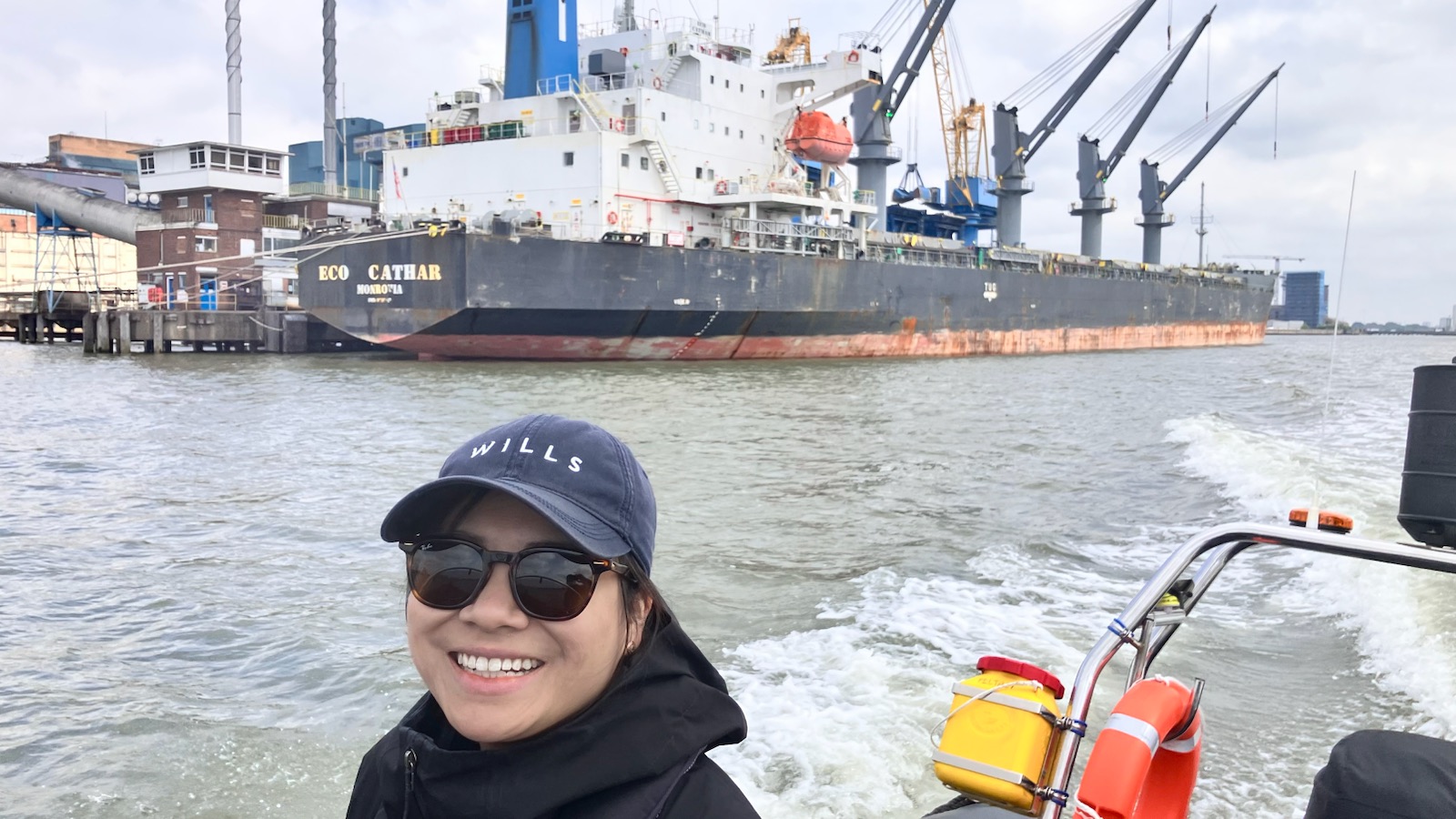
Coming alongside with the tide running. Holding a boat steady against the stream. Reading the wash from a passenger boat before it reaches you. Sharing the water with cargo ships and tugs, and using the buoyage and the rules of the road for real rather than on a diagram.
By the end of day two, the quiet conditions you might meet on holiday feel easy, because you’ve already handled the harder version.
Real water
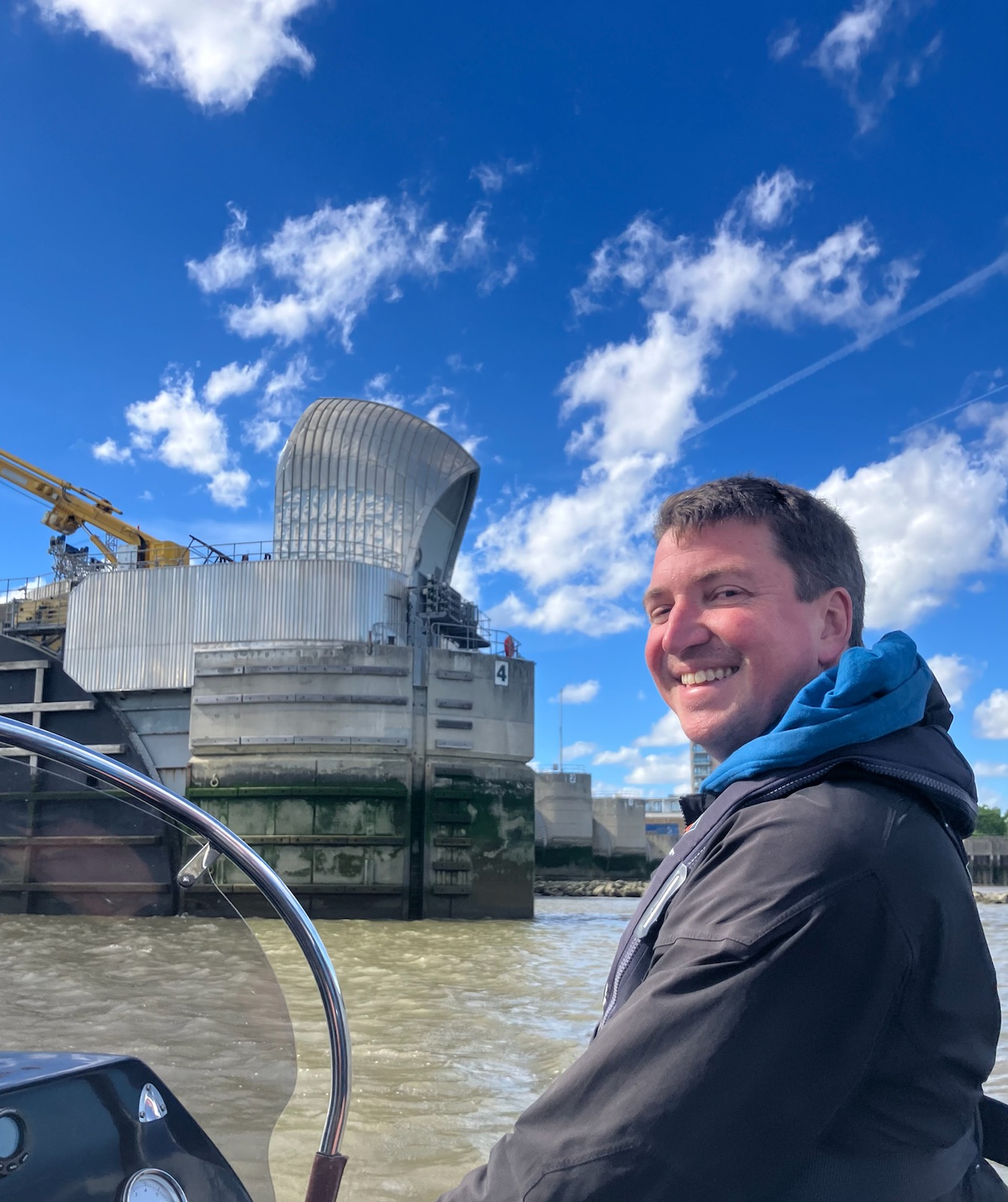
Tide, current and wash from working vessels. You learn to read moving water from the first morning.
A charted, busy river with buoyage, bridges and commercial traffic you have to account for.
Learn here and quieter water feels easy. Skills built on the Thames travel anywhere.
We train within 3 nautical miles of Trinity Buoy Wharf: the wide reaches around the mouth of the River Lea, past the O2 and Greenwich, and down towards the Thames Barrier. There’s room to practise at planing speed, quieter water for slow-speed work, and enough traffic to make the rules of the road real.
The school has worked this river for more than 21 years. The order of each day moves with the tide, the weather and the traffic, so the exercises always suit the water.
Read the full Level 2 course, or see the live dates.
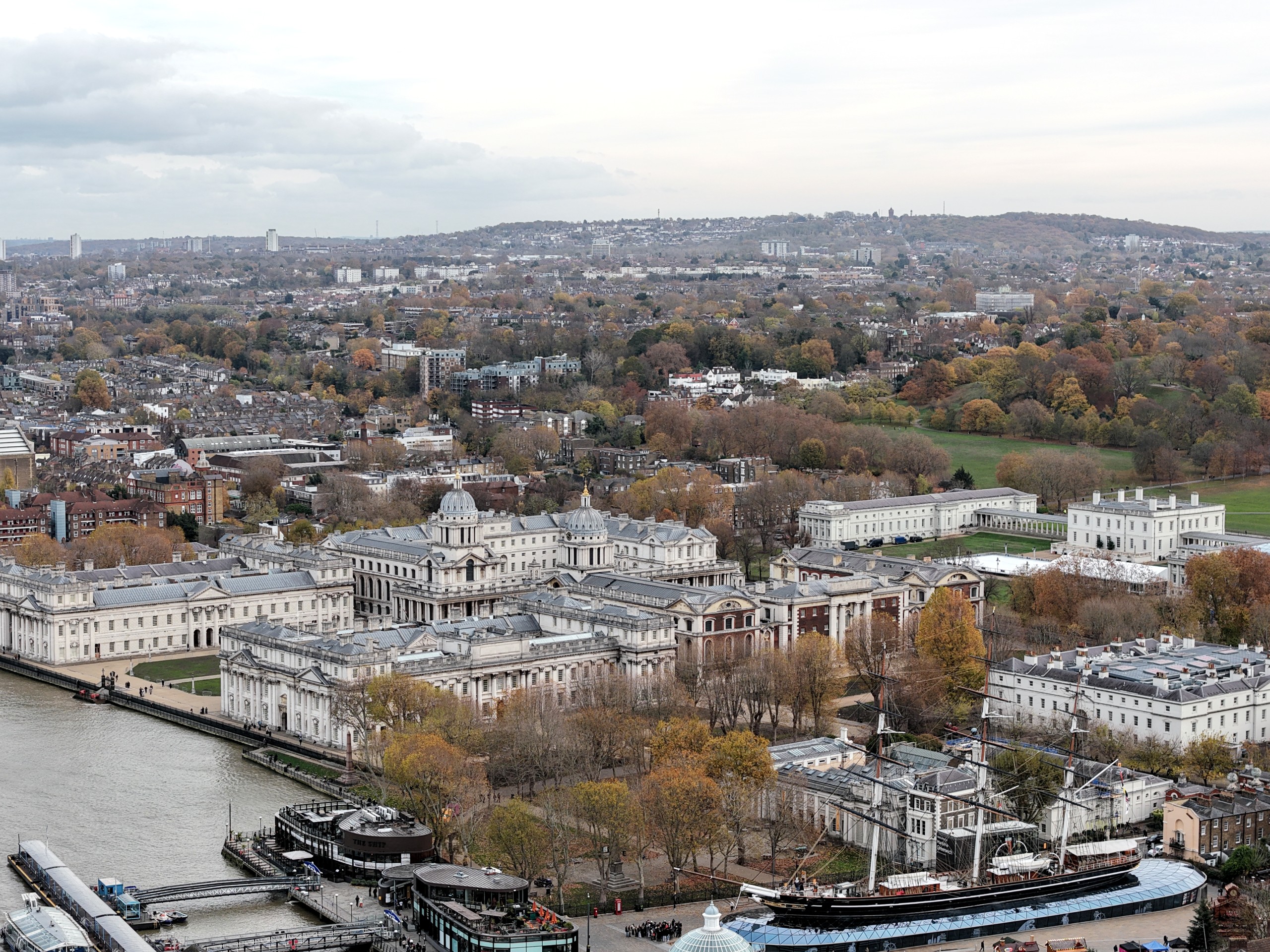
Aerial photo: Cinecraft
From the gauge
Live readings from the Environment Agency gauge at the Thames Barrier, the same numbers we plan the day with.
Live from the river
6.2 m
rise and fall in the last 24 hours
Reviews
Bill was a fantastic instructor for the Powerboat Level 2 course. He explained everything clearly, kept the sessions engaging, and made sure I felt confident and safe on the water. His experience and calm teaching style made the learning process really enjoyable.
Driving a power boat past the Old Royal Naval College is enough of a reason to take the course in and of itself, but Bill was a very knowledgeable and clear instructor and I left feeling confident of my ability to drive any small boat, and wishing it hadn’t ended.
Due to a last-minute booking on my end, Bill handled it with the utmost professionalism and kindness. Knowing that I was on a tight schedule, he went completely above and beyond to arrange a bespoke session for me. I felt safe, learned a massive amount of practical boat-handling skills, and gained so much confidence on the water.
The course was set out in an inclusive and informative way with a great balance between practical and theory, keeping the classroom to a minimum. The setting itself is also exceptional and I enjoyed exploring the wharf during our breaks.
My 12 year old son and I completed the RYA L2 course with Bill last week. We had a great time and learned a huge amount. He made everything come alive for us by combining the theory and practical elements together, for example by learning chart skills in practice on the boat.
Such a fabulous weekend getting our Level two on the Thames! Bill was brilliant and so enjoyable to be with. All three of us came away wishing we could have another day. Feeling very confident and ready to take a boat out for the day on my next trip to France.
Bill is utterly charming, a great instructor, and very experienced. He helped us with our Level 2 Powerboating and we felt in capable hands. Highly recommend for any level of experience
…his knowledge of the river is second to none… The amenities in the area are great (good grub at the cafe nearby)
Reviews published on Google by students who completed a course. Trimmed for length, never reworded.
FAQs
Yes, with the right boat and instructor. You wear a lifejacket throughout, there are never more than three students aboard, and the school has been on this stretch of river for more than 21 years.
We train within 3 nautical miles of Trinity Buoy Wharf, where the River Lea meets the Thames: around the Lea mouth, past the O2 and Greenwich and down towards the Thames Barrier.
We plan around it. The order of the exercises moves with the tide, the weather and the traffic, so you practise in conditions that teach you something.
Often. This is a working river, with cargo ships, passenger boats and tugs. Learning to share it with them is part of the course.
The tidal Thames here is Category C water with up to 7.5m of tide, so your Level 2 counts as a coastal course rather than an inland one. If you plan to take a boat out on the coast, at home or abroad, you’ve already handled moving water.
Level 2 guides
The two-day course itself: syllabus, live dates and reviews.
ReadDo you need one? What people really mean, and how to get it in two days.
ReadFrom £500: what’s included, what isn’t, and the private option.
ReadThe two days, how you’re assessed and what to bring.
ReadLearn to drive a RIB or speedboat, aboard an offshore RIB.
ReadFrom age 12: the rules for under 16s and learning together.
ReadWhat employers ask for, and the commercial endorsement.
ReadBuy a Level 2 course as a present. The gift letter comes by email.
ReadBoating abroad, and how Level 2 gets you there.
ReadTwo days on the tidal Thames from Trinity Buoy Wharf. A coastal Level 2, in London.
