
Powerboat licence, explained
There’s no legal powerboat licence for leisure boating in UK waters. What people mean, and what hire firms, insurers and the ICC ask for, is RYA Powerboat Level 2. We teach it on the tidal Thames.
Not by law, if you’re boating for pleasure in UK waters. Nobody needs a licence to take a RIB or a speedboat out for the day, and the RYA, the national body for boating, says the same.
In practice it’s a different story. Boat hire firms, many insurers and marinas, and charter companies abroad want to see a qualification before they hand over the keys. The one they ask for is RYA Powerboat Level 2, which is why everyone calls it the powerboat licence.
Level 2 shows you can handle a small powerboat safely: slow-speed work around pontoons and other boats, coming alongside, man-overboard recovery, driving at planing speed and the rules of the road. With the certificate you can hire or borrow a boat with confidence, apply to the RYA for an ICC if you’re 16 or over, and go on to the commercial endorsement if you want to drive a boat for work.
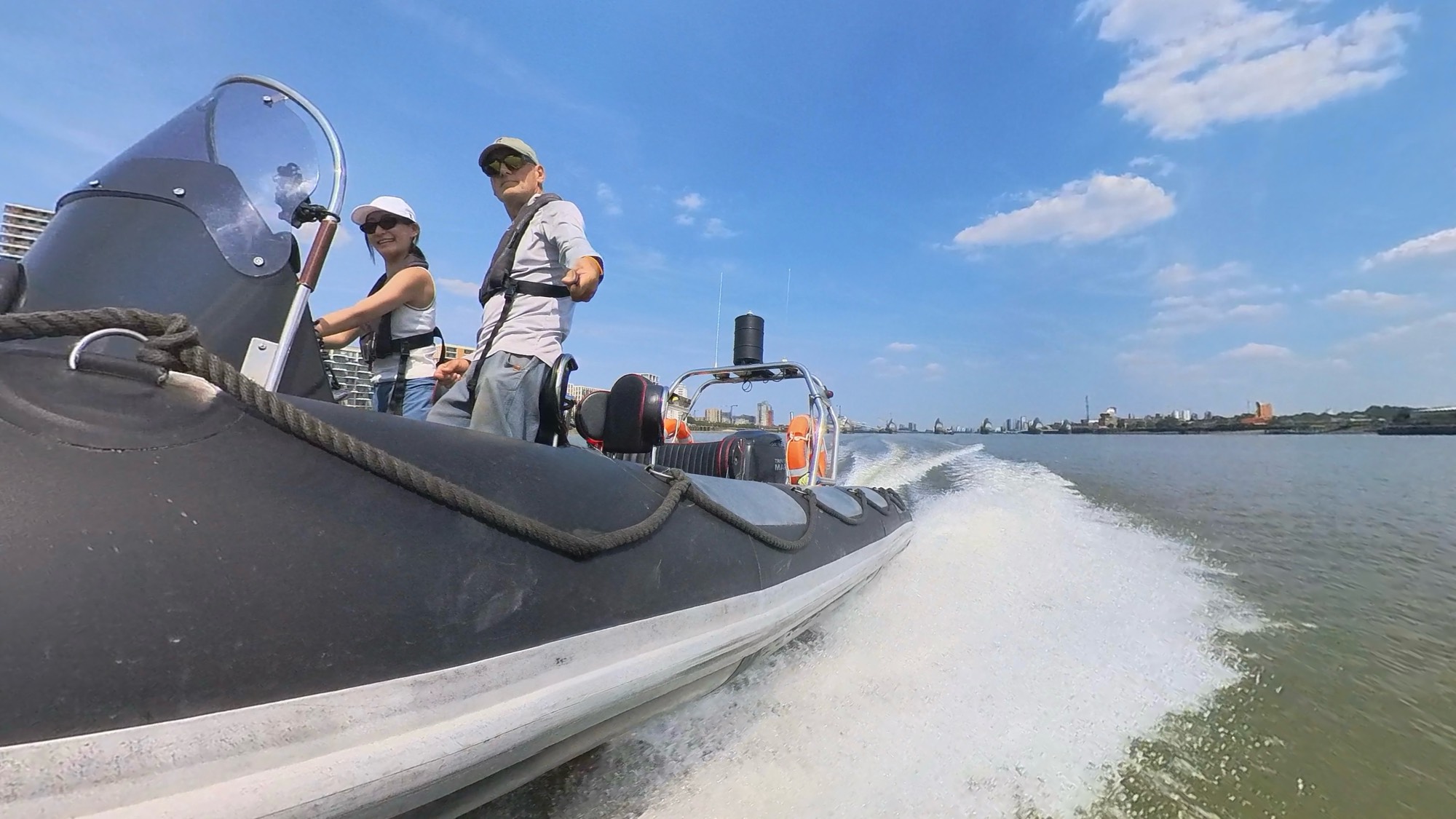
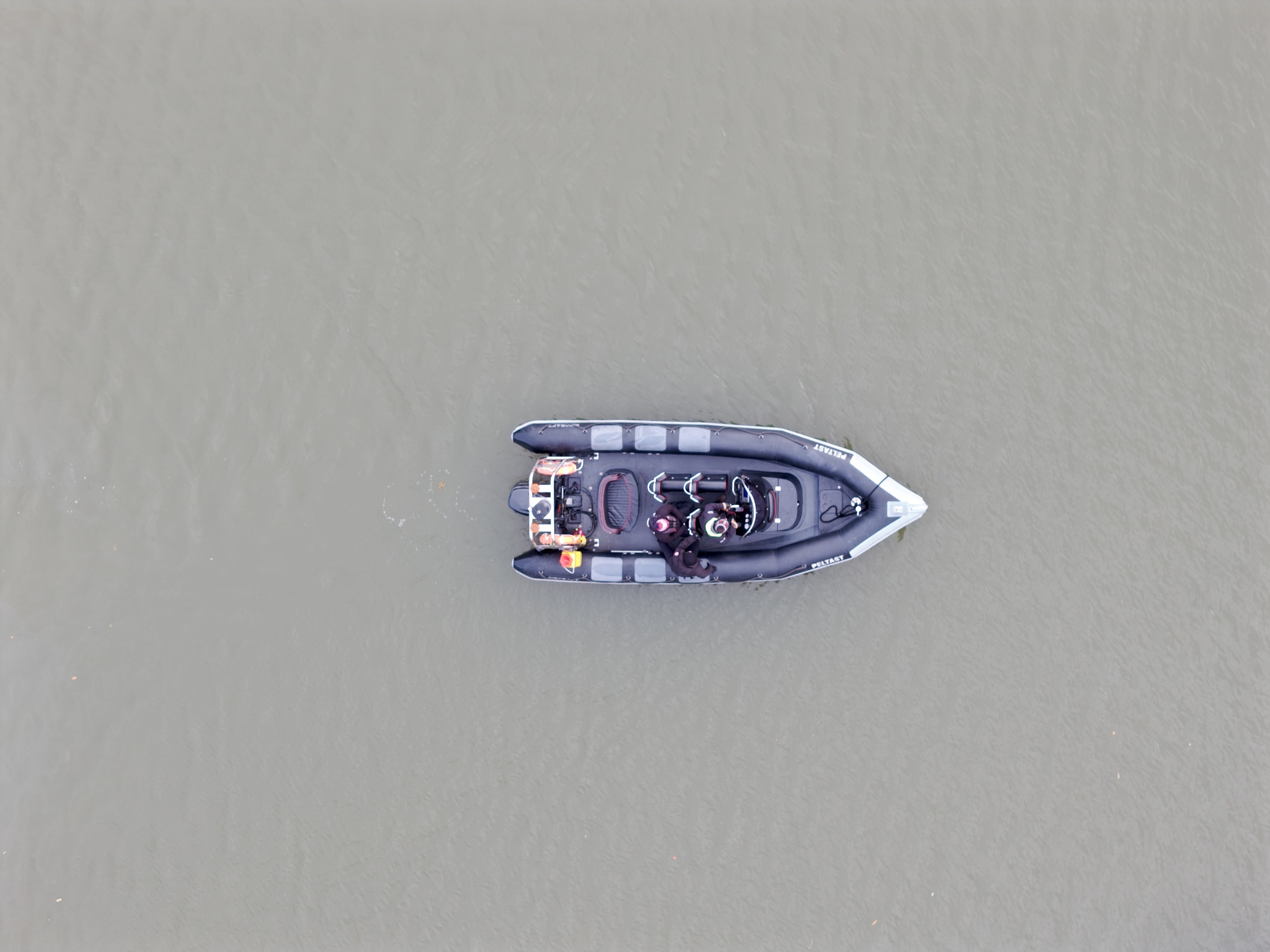
Aerial photo: Cinecraft
Where the word applies
Level 2 is the qualification. These are the places where the law or a rulebook does ask for something.
On canals and non-tidal rivers the boat itself needs a licence or registration from the navigation authority. That’s the boat, not the driver.
If the boat carries a VHF radio, you need a radio operator’s certificate to use it. That’s a separate course from Level 2.
Driving a boat commercially needs the RYA commercial endorsement on top of Level 2.
Each country sets its own rules. Many ask for the ICC, which Level 2 leads to.
Our Level 2 runs over two days from Trinity Buoy Wharf in E14, where the River Lea meets the Thames, about ten minutes’ walk from East India DLR. No experience is needed and there are never more than three students on the boat, so you get plenty of time at the helm.
The price covers the RYA handbook and logbook, lifejackets and all the safety kit, fuel and your certificate. The tidal Thames here is Category C water with up to 7.5m of tide, so your Level 2 counts as a coastal course rather than an inland one. That matters if your licence is for a holiday on the coast.
See the live course dates, or read why we teach on the tidal Thames.
FAQs
Strictly, no. It’s an RYA certificate of training, not a legal licence, because UK law doesn’t require one for leisure boating. It is the qualification hire firms, insurers and charter companies usually mean when they ask for a powerboat licence.
Not for pleasure in UK waters. You still have to follow the collision regulations and local rules such as speed limits, and Level 2 teaches you how.
Two days, 09:00 to 17:00. You’re assessed as you go, and everyone who reaches the standard gets their certificate at the end of day two.
Yes. Level 2 is designed as a first course and most of our students start from nothing.
12. Under 16s come with a parent or guardian and receive a certificate endorsed for use under the supervision of a responsible adult. From 16 you can come on your own.
Many countries and charter firms ask for the ICC. Level 2 is the basis of it for power vessels up to 10m, and you apply to the RYA once you hold your certificate. Our ICC guide explains the rules.
Level 2 guides
The two-day course itself: syllabus, live dates and reviews.
ReadWhy moving water, tide and traffic make a better course.
ReadFrom £500: what’s included, what isn’t, and the private option.
ReadThe two days, how you’re assessed and what to bring.
ReadLearn to drive a RIB or speedboat, aboard an offshore RIB.
ReadFrom age 12: the rules for under 16s and learning together.
ReadWhat employers ask for, and the commercial endorsement.
ReadBuy a Level 2 course as a present. The gift letter comes by email.
ReadBoating abroad, and how Level 2 gets you there.
ReadTwo days, no experience needed, and the qualification hire firms and the ICC ask for.